
When we fall in love, we want to tell everyone, right? It’s the same when we love science. Let’s spread the spirit of learning in the scientific community, especially among students. Since 2003, I have taught various courses at Universiti Teknologi Malaysia (UTM) and Universitas Negeri Malang (UM), reflecting a comprehensive and evolving approach to chemical sciences and related fields. These include Chemical Industry Processes, Materials Chemistry, Chemistry Seminars, Selected Topics in Chemistry, and Research Methodology. Additionally, I have focused on sustainability in science through courses like Basic Sciences of Sustainability and emphasized the ethical aspects of scientific practice in Scientific Ethics.
- Research Group at Universitas Negeri Malang (UM) and Universiti Teknologi Malaysia (UTM)
- Teaching and Mentoring at Universitas Negeri Malang (since semester 2 2021/2022)
- Teaching Subjects at Universiti Teknologi Malaysia (since semester 2 2003/2004)
- Special Lecture on Heterogeneous Catalysis at Department of Chemistry, Institut Teknologi Bandung, Indonesia (16–20 November 2009)
- Teaching Philosophy
- Tools for Teaching
- Reflection
Research Group at Universitas Negeri Malang (UM) and Universiti Teknologi Malaysia (UTM)
I feel fortunate to have the opportunity to supervise students at both Universitas Negeri Malang (UM) (since semester 1 of 2022/2023) and Universiti Teknologi Malaysia (UTM). Their support keeps me motivated to fulfill my duties as a lecturer. May our research journey be blessed.
Teaching and Mentoring at Universitas Negeri Malang (since semester 2 2021/2022)
- Sains Dasar Berkelanjutan (FMIA236001 – Sem 1 – 2025/2026)
- Filsafat Ilmu (UNIV259001 – Sem 1 – 2025/2026)
- Etika Keilmuan (UNIV258001 – Sem 1 – 2025/2026)
- Seminar Kimia (NKIMUM6011 – Sem 2 – 2024/2025)
- Metodologi Penelitian (NKIMUM6010 – Sem 2 – 2024/2025)
- Aspek Termodinamika Kimia Anorganik (PKIMUM8007 – Sem 2 – 2024/2025)
- Etika Keilmuan (UNIVUM8001 – Sem 2 – 2024/2025)
- Kapita Selekta Kimia (PKIMUM9004 – Sem 2 – 2024/2025)
- Sains Dasar Berkelanjutan (FMIA236001 – Sem 1 – 2024/2025)
- Energetika dan Kinetika Reaksi Kimia (PKIMUM8009 – Sem 1 – 2024/2025)
- Filsafat Ilmu (UNIVUM9001 – Sem 1 – 2024/2025)
- Termodinamika dan Kinetika Kimia (NKIMUM8101 – Sem 1 – 2024/2025)
- Penulisan Karya Ilmiah (NKIMUM8602 – Sem 1 – 2024/2025)
- Proses Industri Kimia (NKIMUM6117 – Sem 2 – 2023/2024) |SIPEJAR|
- Kimia Material (NKIMUM8102 – Sem 2 – 2023/2024) |WEB|
- Seminar Kimia (NKIMUM6011 – Sem 2 – 2023/2024)
- Kapita Selekta Kimia (PKIUM9004 – Sem 2 – 2023/2024)
- Metodologi Penelitian (NKIMUM6010 – Sem 2 – 2023/2024)
- Aspek Termodinamika Kimia Anorganik (PKIMUM8007 – Sem 2 – 2023/2024)
- Sains Dasar Keberlanjutan (FMIA26001 – Sem 1 – 2023/2024)
- Etika Keilmuan (UNIVUM8001 – Sem 1 – 2023/2024)
- Penulisan Karya Ilmiah (NKIMUM8602 – Sem 1 – 2023/2024)
- Filsafat Ilmu (UNIVUM9001 – Sem 1 – 2023/2024)
- Kapita Selekta Kimia (PKIMUM9004 – Sem 2 – 2022/2023) |SIPEJAR|P|YT|
- Aspek Termodinamika Kimia Anorganik (PKIMUM8007 – Sem 2 – 2022/2023) |GD|YT|SIPEJAR|P|
- Proses Industri Kimia (NKIMUM6117 – Sem 2 – 2022/2023) |GD|YT|SIPEJAR|P|
- Metodologi Penelitian (NKIM6010 – Sem 2 – 2022/2023) |GD|YT|YT2|SIPEJAR|P|
- Nanomaterlal (NFISUM6610 – Sem 2 – 2022/2023) |GD|YT|SIPEJAR|P|
- Nanomaterlal (NFISUM8303 – Sem 2 – 2022/2023) |GD|YT|SIPEJAR|P|
- Seminar Kimia (NKIM6011 – Sem 2 – 2022/2023) |GD|YT|SIPEJAR|P|
- Filsafat Ilmu (UNIVUM9001 – Sem 1 – 2022/2023) |GD|YT|SIPEJAR|P|
- Etika Keilmuan (UNIVUM8001 – Sem 1 – 2022/2023) |GD|YT|SIPEJAR|P|
- Penulisan Karya Ilmiah (NKIMUM8602 – Sem 1 – 2022/2023) |GD|YT|SIPEJAR|P|
- Praktikum Kimia Fisika Terapan (NKIMUM6105 – Sem 1 – 2022/2023)|P|
- Fisika Material (NFIS6304 – Sem 2 – 2021/2022) |FB|GD|YT|SIPEJAR OFF-AM|SIPEJAR OFF-O|P|
- Metodologi Penelitian (NKIM6010 – Sem 2 – 2021/2022) |FB|GD|YT|SIPEJAR|P|YT2|JDW|
- Proses Industri Kimia (NKIMUM6117 – Sem 2 – 2021/2022) |FB|GD|YT|SIPEJAR|P|
- Nanomaterlal (NFISUM8303 – Sem 2 – 2021/2022) |FB|GD|YT|SIPEJAR|P|
- Seminar Kimia (NKIM6011 – Sem 2 – 2021/2022) |FB|GD|YT|SIPEJAR OFF-J|P|
- Kapita Selekta Ilmu Material, Program Magister dan Doktor, Departemen Kimia (2021) |WEB|
- Daftar putar (playlist) video pengajaran |YT ver 1|YT ver 2|
- Bimbingan skripsi dan praktek kerja lapangan (PKL) |YT|
- Bimbingan postdoc dan mahasiswa Ph.D. |YT| (pribadi)
- Jam kuliah |JD|
Teaching Subjects at Universiti Teknologi Malaysia (since semester 2 2003/2004)
- Research Methodology (USCP 0010/MSCK 1303/MSCN 1303/MFSC 1303 – Sem 1 – 2021/2022) |FB|YT|YT2|
- Chemical Reactions Process (SSCC 4443 – Sem 1 – 2021/2022) |FB|YT|
- Research Methodology & Information Retrieval (SSCU 3623 – Sem 2 – 2020/2021) |FB|WEB|GD|YT|
- Solid State Chemistry (SSCC 4473 – Sem 2 – 2020/2021) |FB|WEB|GD|
- Green Chemistry (SSCC 4363 – Sem 1 – 2020/2021) |FB|WA|GD|
- Solid State Chemistry (SSCC 4473 – Sem 2 – 2019/2020) |FB|WA|
- Chemical Reactions Process (SSCC 4443 – Sem 1 – 2019/2020) |FB|GD|
- Molecular Spectroscopy (SSCC 2473 – Sem 2 – 2018/2019) |FB|GD|
- Green Chemistry (SSCC 4363 – Sem 1 – 2018/2019) |FB|
- Chemical Reactions Process (SSCC 3423 – Sem 2 – 2017/2018)
- Quantum Chemistry (SSCC 3463 – Sem 2 – 2017/2018) |VID1|VID2|
- Research Methodology (MSCK 1303 – Sem 1 2017/2018) |PIC|
- Green Chemistry (SSCC 4363 – Sem 1 – 2017/2018)
- Chemical Reactions Process (SSCC 3423 – Sem 2 – 2016/2017) |GD|
- Quantum Chemistry (SSCC 3463 – Sem 2 – 2016/2017)
- Surface and Colloid Chemistry (SSCC 4493 – Sem 2 – 2015/2016)
- Quantum Chemistry (SSCC 3463 – Sem 2 – 2015/2016)
- Chemical Reactions Process (SSCC 4443 – Sem 2 – 2015/2016) |PIC|
- Solid State Chemistry (SSCC 4473 – Sem 2 – 2014/2015) |PIC1|PIC2|
- Chemical Reactions Process (SSCC 4443 – Sem 1 – 2014/2015)
- Quantum Chemistry (SSCC 3463 – Sem 2 – 2013/2014) |PIC1|PIC2|PIC3|
- Chemical Reactions Process (SSC 4443 – Sem 1 – 2013/2014) |PIC|
- Molecular symmetry and spectroscopy (SSC 2433 – Sem 2 – 2011/2012) |PIC|
- Molecular symmetry and spectroscopy (SSC 2433 – Sem 1 – 2010/2011) |GD|
- Surface and Colloid Chemistry (MSK 1433 – Sem 1 – 2012/2013) |GD|PIC1|PIC2|
- Surface and Colloid Chemistry (MSK 1433 – Sem 1 – 2011/2012)
- Advanced Physical Chemistry (MSK 1413 – Sem 3 – 2010/2011)
- Advanced Spectroscopy (MSK 1453 – Sem 2 – 2010/2011) |GD|PIC1|PIC2|PIC3|
- Molecular Symmetry and Spectroscopy (SSC 2433 – Sem 1 – 2010/2011)
- Solid State Chemistry (SSC 3473 – Sem 2 – 2009/2010) |GD|PIC1|PIC2|PIC3|PIC4|PIC5|PIC6|
- Quantum Chemistry and Spectroscopy (SSC 2463 – Sem 1 – 2009/2010) |GD|
- Solid State Chemistry (SSC 3473 – Sem 2 – 2008/2009) |GD|
- Quantum Chemistry and Spectroscopy (SSC 2463 – Sem 1 – 2008/2009) |GD|
- Industrial Chemical Process (SSC 2423 – Sem 2 2007/2008) |PIC|GD|
- Quantum Chemistry and Spectroscopy (SSK 2463 Sem 1 – 2007/2008) |PIC1|PIC2|
- Physical Chemistry II (SSC 2413 – Sem 1 2006/2007) |GD|
- Materials Chemistry (SSK 3752 – Sem 1 2005/2006) |PIC1|PIC2|PIC3|
- Materials Chemistry (SSK 3752 – Sem 2 2004/2005)
- Quantum Chemistry and Spectroscopy (SSK 3443 – Sem 1 – 2004/2005) |GD|
- Advanced Spectroscopy (SSK 3423/MSK 1453 – Sem 2 – 2003/2004)

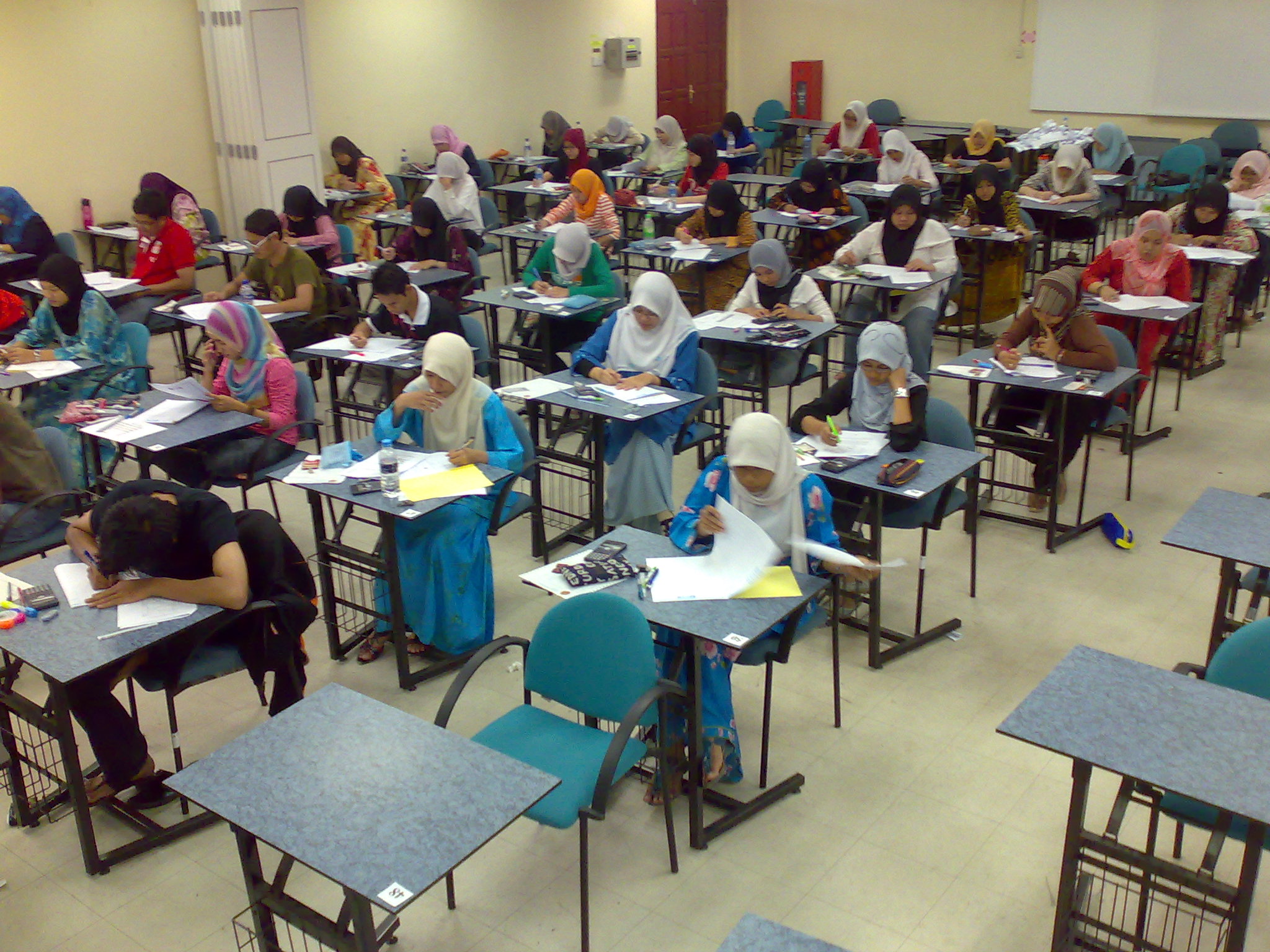
Special Lecture on Heterogeneous Catalysis at Department of Chemistry, Institut Teknologi Bandung, Indonesia (16–20 November 2009)
Teaching Philosophy
After completing my Ph.D. in 1998, I embarked on a 4.5-year journey as a postdoctoral researcher at Universiti Teknologi Malaysia and Hokkaido University, Japan. In 2003, I began my tenure as a lecturer at Universiti Teknologi Malaysia. Throughout my career, I have been passionate about teaching and committed to research, believing both are essential to excelling in the scientific field. My teaching philosophy emphasizes the importance of inspiring students, not just instructing them. This involves sharing experiences and encouraging a deep understanding of concepts through various methods rather than rote memorization.
I have always sought to make learning engaging and accessible to all students, adapting to diverse learning styles and employing creative approaches. In my classes, I focus on helping students visualize concepts from multiple angles, using analogies and visual aids to foster a comprehensive understanding. My goal is to instill a love for learning, understanding, and critical thinking, which I believe are the ultimate objectives of education. My enthusiasm for my subject is intended to spark students’ interest, making the learning experience more effective and enjoyable.
Having taught for over 20 years, I recognize the importance of continually striving to inspire students. This goes beyond mere teaching; it involves sharing experiences and insights that can enrich their learning journey. My experience has taught me that an engaging and effective learning environment is crucial for student success. I am committed to improving my teaching practices, integrating technology like artificial intelligence, and developing innovative teaching methods to enhance the educational experience. My long-term goal is to convey information and create a dynamic learning environment that motivates and inspires students to achieve their full potential.
Despite the significant administrative duties that come with being a lecturer in Indonesia, which can often be time-consuming and detract from teaching and research activities, it’s crucial to remain focused on the core mission of educating and mentoring students. While important, the administrative aspects of the job should not overshadow the primary goal of teaching and inspiring the next generation. It’s essential to balance these responsibilities effectively, ensuring that the quality of education and student development remain at the forefront of our efforts.
Tools for Teaching
I rely on various platforms, such as WordPress, Google Drive, Google Calendar, Facebook (since 2018), and YouTube, to carry out my teaching activities. These tools allow for easy recording and collection of data and activities. If you’re interested, check out my presentation on how to use these platforms for teaching, which I gave at the Teaching and Learning in Chemistry Symposium on May 25th, 2021.
Reflection

You must be logged in to post a comment.